.png)
Sustainability has shifted from a moral imperative to a market mandate. Across global private markets, investors are navigating an increasingly complex regulatory landscape, from the SFDR in Europe to emerging disclosure standards in North America and Asia. Sustainability reporting has become inseparable from fundraising, risk management, and portfolio oversight.
Amid this evolution, a new generation of investment firms is treating sustainability data as a strategic asset rather than a compliance cost. They’re integrating sustainability metrics into due diligence, aligning portfolio governance with measurable outcomes, and using sustainability data to stand out in fundraising, differentiate from competitors, and elevate their portfolio's value.
Over the past five years, sustainability disclosure requirements have expanded faster than almost any other regulatory domain. A GRI-sourced study of the regulatory landscape found reporting provisions across more than 80 countries. In Europe, the Sustainable Finance Disclosure Regulation (SFDR) has set the bar for transparency, requiring funds to disclose not just policies, but measurable outcomes.
This surge in regulation has introduced significant operational and financial strain. Institutional investors now spend an average of $1.4M annually navigating a growing maze of reporting frameworks, including SFDR, EDCI, Invest Europe, and the EU Taxonomy. Portfolio companies must report to multiple frameworks, while GPs face increasingly demanding data requests from LPs.
But this growing complexity is also creating opportunity. Firms that invest early in automation and data infrastructure are going beyond compliance to uncover deeper insights into risk exposure, operational efficiency, and long-term value creation. Increasingly, a fund’s ability to demonstrate credible sustainability integration has become a proxy for risk mitigation and forward-looking strategy.
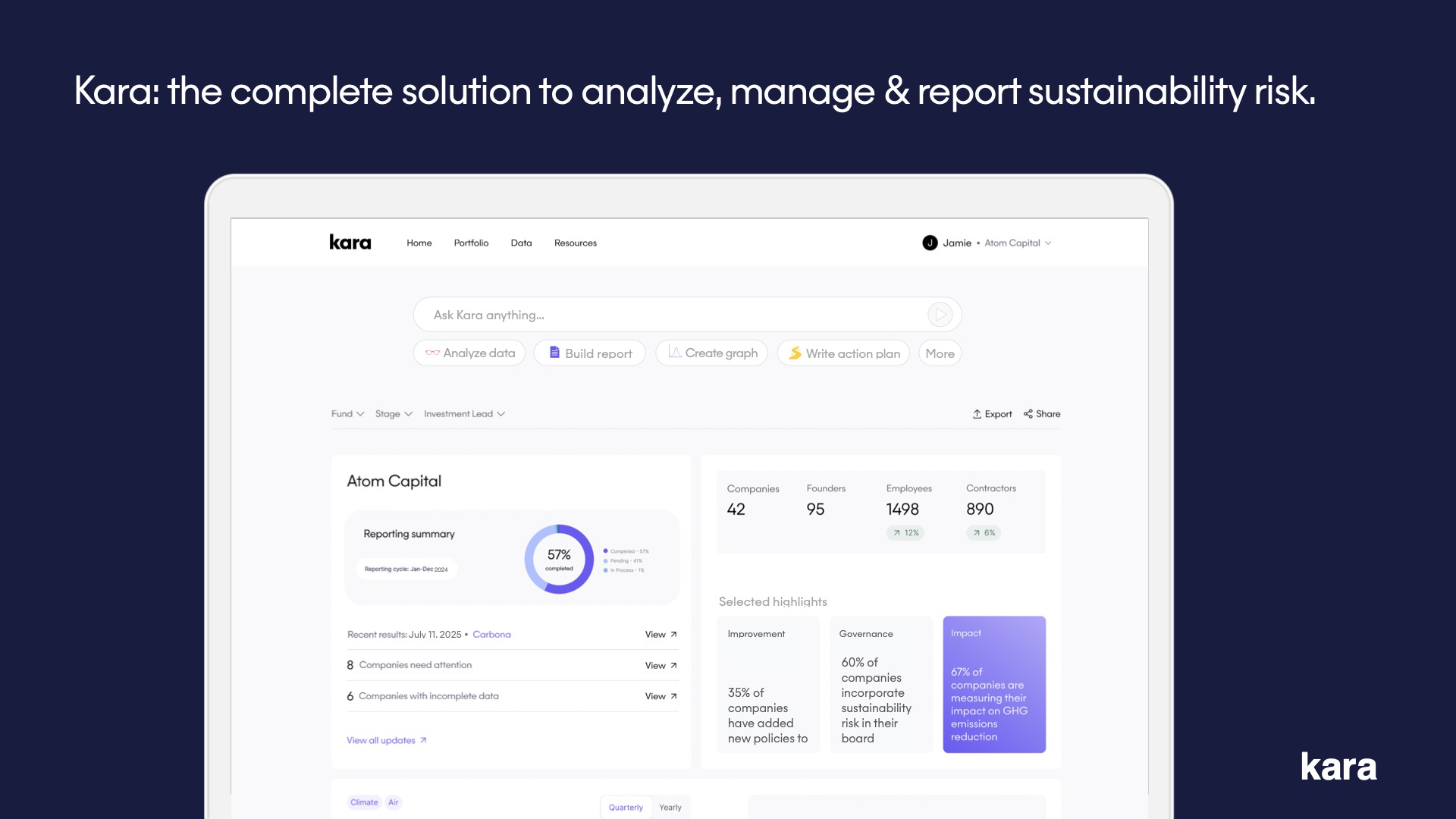
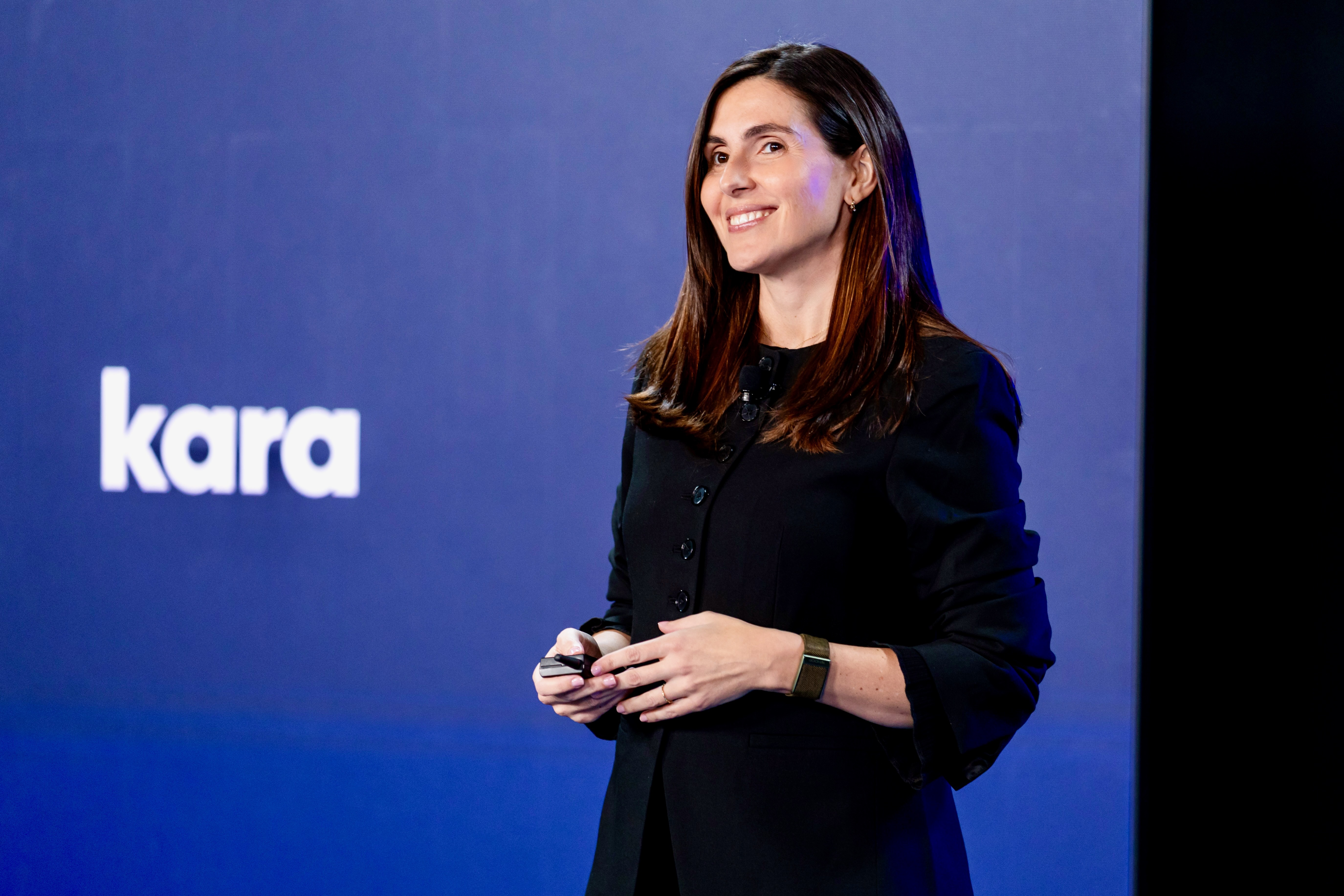
At the centre of this shift is Kara, the sustainability risk management and reporting platform built for financial institutions and companies. We sat down with Miriam Roure, Founder and CEO of Kara, to explore how leading funds are using the platform to streamline reporting while also embedding sustainability throughout the investment lifecycle, authentically communicate about their sustainability journey, and drive value creation across their portfolios.
Sustainability reporting and management is increasingly complex for investors. What are the biggest pain points you’re seeing in the market right now and how does Kara help solve them?
"For many investors, sustainability reporting and management can often feel like a maze: full of spreadsheets, fragmented data, and constantly changing regulations. Before working with Kara, our customers said that they often spent more time collecting data from their portfolio companies through repetitive, manual processes than actually using it.
I founded Kara to simplify this complexity. Kara's mission is to empower financial institutions and companies to create a sustainable future, starting today. To do this, we help venture capital and other private equity firms automate data collection, connect insights across portfolios, and stay ahead of reporting frameworks with ease. By turning fragmented processes into a single, intuitive system, Kara saves time, improves data quality, and helps teams seamlessly report to regulations and LP data requests. Ultimately, it’s about turning sustainability reporting and management from a burden into a competitive advantage."
How are firms using Kara to move beyond compliance and elevate the value of their portfolios?
"We're seeing a big shift in how investors think about sustainability. It's no longer just about reporting, but about using data to elevate their portfolio's value. Impact metrics have become a powerful tool to do just that.
This is why one of our customers, a US early-stage climate tech venture capital firm that backs companies that accelerate the energy transition and strengthen supply chain resilience, partnered with Kara. Impact has always been core to their investment thesis and valued by their LPs, but manual, inconsistent processes made scaling that vision hard. Kara helped streamline data collection, align impact metrics across their portfolio, and forecast future impact potential.
We're proud to see that through Kara’s platform, the mentioned customer has successfully streamlined data collection, improved impact storytelling, and empowered portfolio companies with vetted impact metrics. As LP expectations become more demanding, ‘bulletproof’ impact data has become a key differentiator for the firm. With Kara as their partner, I believe this firm is well-equipped to measure performance and leverage data for long-term portfolio growth."
Could you share an example of how a firm has used Kara to communicate their sustainability journey?
"Increasingly, more of our customers are coming to us to ask if it's possible to use the sustainability data on the platform to authentically communicate their performance through sustainability reports. This happened with a customer who is one of Spain's leading and largest venture capital firms.
As part of our multi-year partnership with this firm, we created a bespoke sustainability report that leveraged data straight from Kara's platform to communicate their wins, lessons learned, and where they are headed next in their sustainability journey. The report became a strategic asset as the firm used the report to help build LP trust, transparently communicate progress on sustainability commitments, and communicate with clarity during fundraising.
We love helping our customers bring their sustainability story to life, and we are proud to support several of our customers in creating reports using data from the platform."
What best practices are you seeing emerge in how firms are using sustainability data to accelerate their sustainability strategy?
"We’re seeing leading firms use sustainability data as a lever for value creation - not just for reporting.
Several of our ambitious customers are using Kara to measure both the sustainability and impact performance of their portfolio. Additionally, they are using the benchmarks on the platform to better understand how their portfolios compare to their peers, identify areas for improvement, and inform strategic decisions.
We find that the real shift occurs when firms move beyond only engaging with portfolio companies to collect data for reporting and instead start to guide their portfolio companies on their sustainability journeys. That’s why we built the Kara Resource Hub - a library of practical guides, policy templates, and regulatory explainers that help companies strengthen their sustainability practices.
And finally, forward-thinking firms are focusing on streamlining their workflows. This looks like using platforms like Kara to gather data once and then using it to meet multiple regulations and LP requests."
Looking ahead, what does the future of sustainability management and reporting look like for investment firms?
"I believe the future of sustainability management and reporting is all about value creation and linking sustainability to financial performance.
One way sustainability can effectively be used to elevate a portfolio's value is by focusing on materiality. This involves identifying the sustainability topics that are material to each company's sector and then executing targeted, high-return-on-investment initiatives. We're also seeing more firms adopt double materiality, assessing both how sustainability affects the business and how the business affects society, which is excellent as it allows investors to prioritise working with their portfolio on financially relevant topics that create value and mitigate risk.
I think a crucial way to effectively link sustainability to financial performance is for sustainability to be part of the conversation from day one. Embedding sustainability throughout the investment lifecycle and setting sustainability goals after investment close helps make sure it becomes a core measure of a company's performance, not an afterthought.
Ultimately, linking sustainability with value creation and financial performance will help us ensure every investment made can move us forward to a future in which people and the planet can thrive together."
As the private markets evolve, sustainability is no longer just a disclosure exercise. Now it’s a signal of operational quality - of how a firm mitigates risk, evaluates opportunity, and delivers value over time. Across both sustainability and finance teams, sustainability has become a crucial indicator of how prepared a firm is for the next decade of capital markets.
Kara’s mission is to make that transformation seamless, building the sustainability data infrastructure needed for investors to stay compliant and grow with confidence.